Unpouched
What the research says about one slip
Addiction researchers have a name for the spiral you're worried about: the abstinence violation effect. It's the moment "I had one pouch" becomes "I ruined it, might as well finish the can." One 6mg pouch doesn't undo weeks of receptor recovery. The real damage comes from the story you tell yourself about what the slip means.
The Kirchner study above followed smokers through lapse after lapse in real time. Two things stand out. First, most people who lapsed did not go straight back to full-time use — slip-and-recover is the normal path, not the exception. Second, the thing that sped people toward the next lapse was losing confidence. "I can't do this" showed up in the data before the next slip did. The belief came first.
Now look at how most quit apps handle a slip. You have one pouch, you're honest about it, and the app wipes your streak to zero: a big visual announcement that you can't do this. The design feeds the exact thing that causes relapse.
I've watched this up close. My best friend, the guy I built Unpouched for, tried to quit for over a year and a half before this app existed. The pattern never changed: two good weeks, one slip at a party, counter back to zero, and then nothing until "I'll start again Monday." The reset never once kept him honest. It just gave him a clean excuse to stop trying.
The math your streak counter won't show you
Say you're on day 30 and you have one pouch at a party. Here is the honest ledger:
- Clean days lived: 30. Still true. Nothing deleted them.
- Nicotine consumed in a month: one pouch — against the 240+ a month you used to run through at eight a day.
- Money still saved: ~$160 of a $165 month, at can-a-day prices.
- Days at zero: zero. You never went back to being a daily user. That's the only "day zero" that exists.
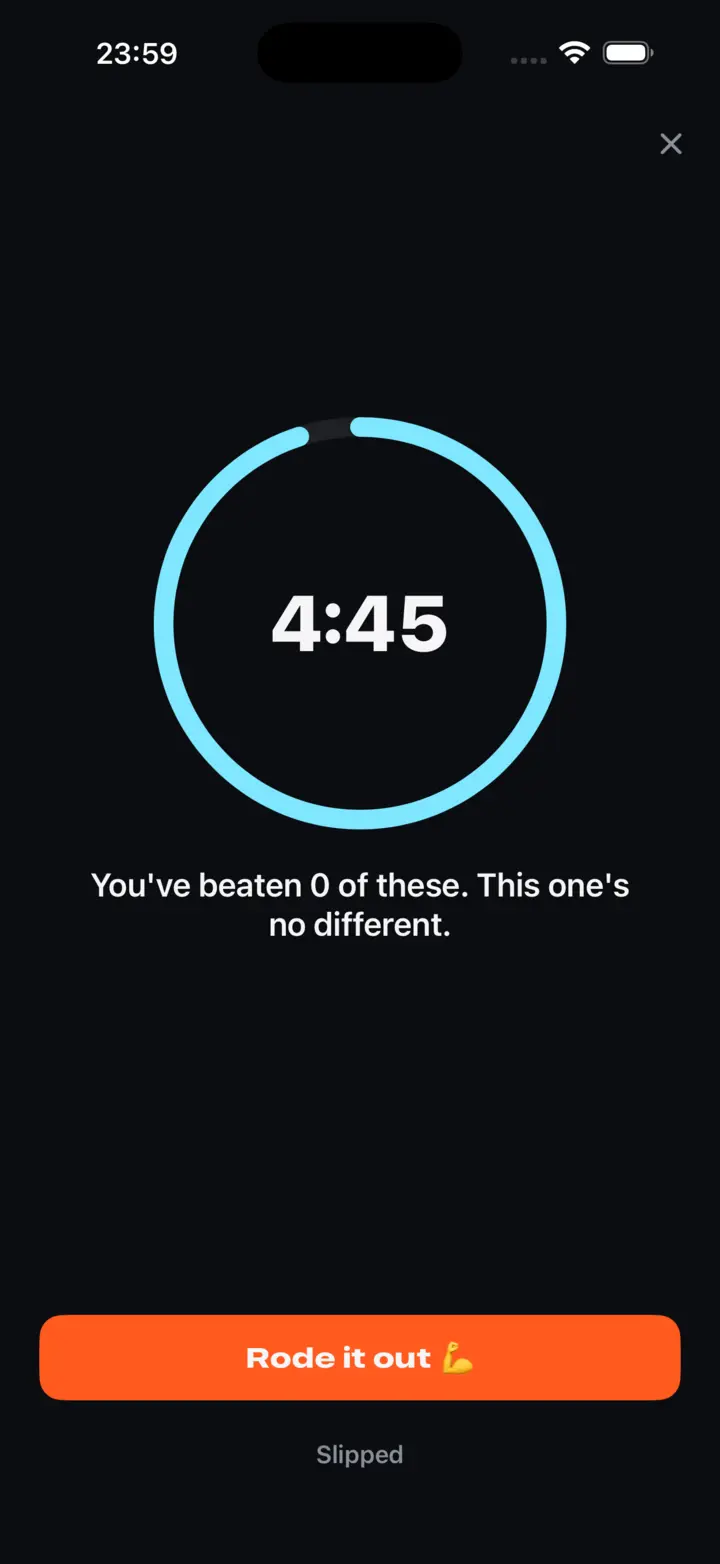
A counter that shows this as 0 is wrong. This is why Unpouched tracks lifetime clean days and longest streak as permanent numbers no slip can touch. The current run can pause, but the record of what you've done only ever grows. I call it Never Day Zero, and it's hard-coded: no path in the app can zero those numbers.
What to actually do in the first hour after a slip
- Don't finish the can. The slip is one pouch. The relapse is the "well, might as well" that follows. Separate them: spit it, bin the rest, leave the room the can is in.
- Log it honestly. Whatever you track with, write it down. A logged slip is data: what time, what trigger, who you were with. An unlogged slip becomes a secret, and secrets snowball.
- Name the trigger. Drinking, stress, boredom, gym? Slips cluster around cues. Knowing yours converts "I'm weak" into "drinking is my weak spot," which is fixable.
- Do the next right thing, not the whole quit. You don't need to re-win the month tonight. You need to not have the second pouch in the next hour. Per Smokefree.gov, craving waves are short — minutes, not evenings.
- Tell the story right. "30 days clean, one slip, back on it" is true, and it keeps your confidence intact. And the study above says confidence is the thing that decides how this goes.
Doesn't going easy on slips just give me permission?
Fair question — it's the whole argument for the day-zero reset. But "no shame" and "no standards" aren't the same thing. The standard stays: the goal is zero pouches, and a slip is a miss. What changes is the price of a miss. When one miss costs everything, people who miss stop trying — that's the abstinence violation effect in one sentence. When a miss costs one day's perfection and nothing else, people log it, learn from it, and keep going. You hold the line and keep the record.
Quick answers
Does one pouch restart nicotine addiction?
One pouch re-exposes your receptors to nicotine, and cravings may tick up for a day or two. It does not reinstall a 20-a-day habit by itself. The danger is behavioral — the "already ruined" story — more than chemical.
How many slips are normal when quitting?
Most successful quitters lapse at least once; multiple attempts before a lasting quit is the documented norm for nicotine. A slip on your record puts you in the majority of people who eventually made it, not outside it.
Should I reset my quit date after a slip?
Keep your original quit date and track slips separately. "Quit June 1, two slips since" is more honest and more motivating than pretending the last 60 days didn't happen. Your body counts total clean time, not unbroken time.