Unpouched
How long does nicotine pouch withdrawal last?
The honest caveat first: almost all withdrawal research was done on smokers, because pouches are new. ZYN wasn't even authorized for US sale by the FDA until January 2025. But withdrawal comes from nicotine leaving your system, and a 6mg pouch habit puts as much nicotine in you as cigarettes do. So the smoker research carries over pretty well, and it lines up with what people quitting pouches describe day by day in places like r/QuittingZyn.
Per Smokefree.gov (the National Cancer Institute's cessation program): "the worst withdrawal symptoms only last a few days to a couple of weeks," and the first week is when you're most likely to slip.
The timeline, hour by hour and day by day
| When | What's happening |
|---|---|
| 0–4 hours | Nicotine's half-life is about two hours, so the level in your blood drops fast. The first "I'd normally throw one in right now" moments hit: after coffee, after eating, sitting down to game or drive. |
| 4–24 hours | Irritability and restlessness start. Your mouth notices the absence: pouch users report the lip habit itself (the ritual, the placement) nags almost as much as the nicotine. |
| Day 2–3 | The wall. This is the peak for most people: worst irritability, anxiety, poor concentration, disturbed sleep, big appetite. If you're going to feel genuinely awful, it's now. It helps a lot to know this is the top of the hill and not your new normal. |
| Day 4–7 | The physical edge starts backing off. Mood is still rough and sleep can stay weird. This is the week most people slip, so load up on substitutes: gum, seeds, cold water, anything that gives your mouth a job. |
| Week 2–4 | Most symptoms trend back to baseline. Concentration returns. What's left is mostly situational: cravings wired to specific cues rather than a constant background pull. |
| Month 2+ | Cue cravings: drinking with friends, long drives, the gym, stress spikes. They're short (a single wave usually passes in minutes), but they can catch you off guard because you thought you were done. |
When does it peak?
Day 2–3 for most people. Hughes' 2007 review, still the reference work on nicotine abstinence, puts the peak of anger, anxiety, trouble concentrating and restlessness in the first week, with most of it gone in two to four weeks. If day 3 flattens you, you're not doing it wrong. You're on schedule.
My best friend is the reason this app exists. He spent over a year and a half trying to quit, and day 3 or 4 is where his attempts kept dying. Nobody had told him it was the peak. He assumed the feeling was permanent, so quitting felt pointless. It wasn't.
Physical vs. mental: which part is actually hard?
The physical side (the jitters, the appetite, the sleep) is real, but it ends. The part people underestimate is the habit itself. A pouch was your reward, your focus tool, your boredom killer, maybe twenty times a day. Each of those moments needs something else in it now, and "just don't buy a can" doesn't fill any of them.
Mayo Clinic describes the same thing about nicotine dependence in general: use gets tied to certain activities, times, and moods. Figure out which ones are yours before you quit. It's the most useful prep you can do.
Does tapering change the timeline?
Tapering trades intensity for duration. Step your daily count down over several weeks and the day-2–3 wall shrinks — you were already running on less. Cold turkey compresses all of it into one brutal fortnight. Neither is "correct": heavy users (8+ a day, or 9mg pouches) tend to do better stepping down; lighter users often prefer ripping the plaster off. What matters more than the method is having a plan for the cue moments either way.
What actually helps
- Ride waves, don't fight states. A craving is a wave with a crest. Time one; most pass within minutes. Box breathing or a 5-minute timer beats white-knuckling.
- Give your mouth a job. Gum, sunflower seeds, toothpicks, cold sparkling water. The oral fixation is its own withdrawal.
- Pre-plan your top three cues. Coffee, driving, drinking — decide the substitute before the moment, not during it.
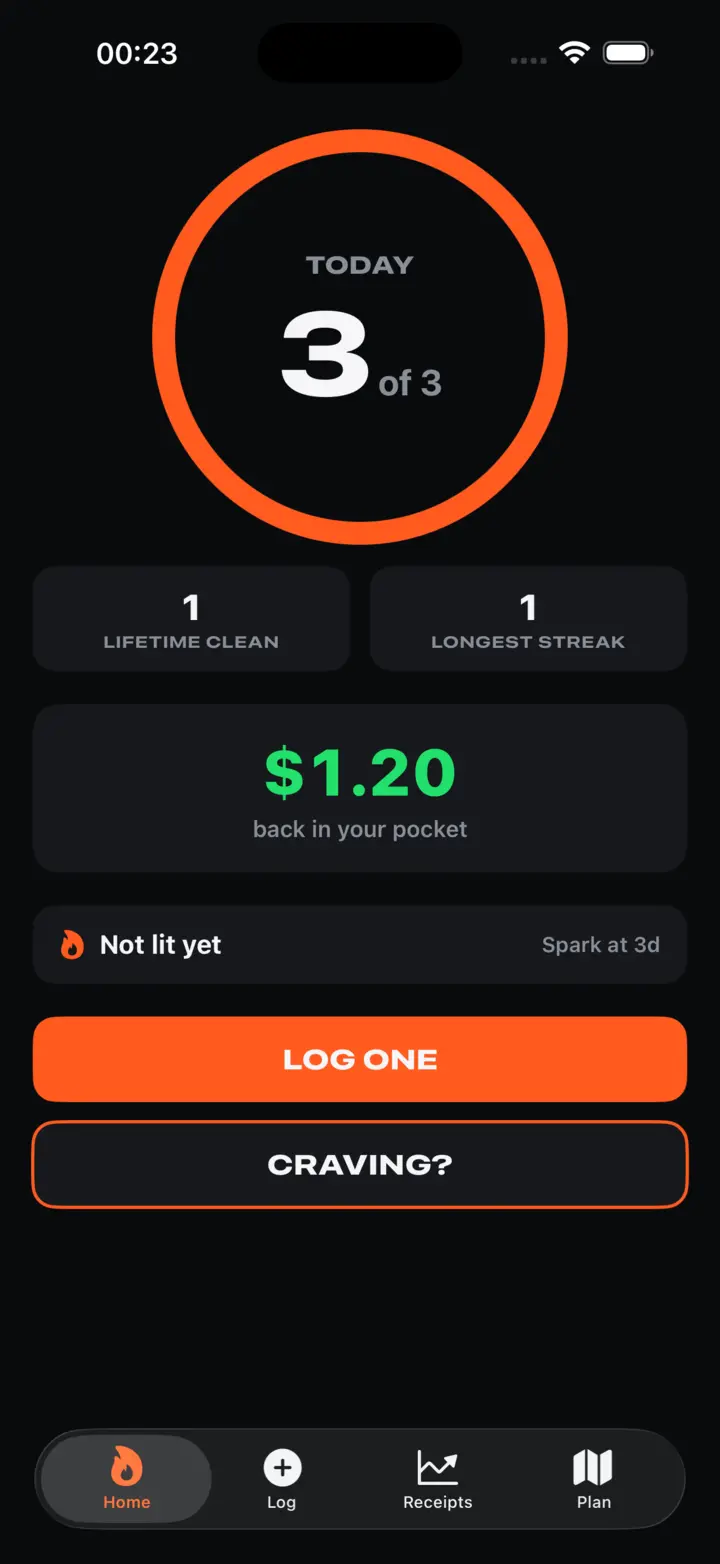
- Count what you're gaining. A can-a-day habit at $5.50 is about $2,000 a year. Watching that number climb back is genuinely motivating — it's why we made the money counter free.
- Treat a slip as data, not a reset. One pouch on day 12 doesn't erase 12 clean days — the research on relapse says what matters is what you do next. More on that in "I slipped — do I start over?"
Quick answers
How long until nicotine is out of my system?
Nicotine itself clears in a day or two (half-life ≈ 2 hours). Cotinine, the metabolite tests look for, takes roughly one to two weeks. Withdrawal symptoms outlast the nicotine — they're your brain recalibrating, not the drug lingering.
Is day 3 really the worst?
For most people, yes — days 2–3 are the documented peak of nicotine withdrawal. If you're past day 3, the physical curve is bending in your favor.
How long do cravings last after quitting pouches?
Individual cravings: minutes. The season of frequent cravings: a few weeks, fading fast after the first. Occasional cue-triggered cravings can pop up for months — brief, survivable, and rarer every time you beat one.
Do nicotine pouches cause the same withdrawal as cigarettes?
The nicotine withdrawal is comparable at comparable doses. What differs: no smoke means no lung-recovery arc, but pouch users get an extra oral-habit withdrawal — the lip ritual itself — that smokers describe differently.